Put ten vendors in a room and ask what sovereign cloud means, and you’ll hear ten polished answers. In Europe in 2026, that matters because buyers want more control over data, operations, and legal exposure.
The problem is simple. Two services can both claim sovereignty while offering very different protections. If you’re buying in the sovereign cloud europe market, the useful question isn’t whether a service is sovereign. It’s which controls are real, contractually binding, and fit your risk profile.
Sovereign cloud has four moving parts
In Europe, sovereign cloud has no single universal definition. Providers use the term for different mixes of legal control, local operations, technical isolation, and corporate governance. Country context matters too. A French public buyer, a German bank, and a pan-EU software firm may not apply the same test.
That is why data residency alone is too thin. Keeping data in the EU helps, but it doesn’t settle who can administer systems, compel disclosure, or approve major changes. A workload may sit in Frankfurt while support, telemetry, identity services, or escalation chains still cross borders.
This quick frame helps separate the layers:
| Dimension | What buyers should test | Example control |
|---|---|---|
| Legal | Which laws and courts can reach the service | EU contracting entity, local operator, disclosure process |
| Operational | Who runs the platform day to day | EU-based admins, screened support staff, local incident handling |
| Technical | Whether data and control paths stay inside the boundary | regional isolation, separate control plane, customer-managed keys |
| Governance | Who can approve access or design changes | local board oversight, audit rights, subprocessors approval |
A service can be strong in one layer and weak in another. For example, a vendor may offer EU hosting, but keep privileged support in a non-EU team. Another may run locally, yet rely on a parent company’s shared control plane.
National and sector rules add more texture. France’s SecNumCloud model, public sector procurement rules, and regulated industry standards can all raise the bar. So can internal policy. A hospital group, defense supplier, and retail chain won’t rank the same risks in the same way.
A sovereignty claim only matters when it shows up in contracts, architecture, and audit evidence.
Why the term got sharper in Europe in 2026
By March 2026, the debate is no longer niche. Europe’s push for digital autonomy now shapes board discussions, procurement language, and platform design. Public pressure has also grown, as shown in coverage of Europe’s cloud and AI sovereignty push.
GDPR still sets the base line for personal data. Yet sovereignty goes wider than privacy. It also covers foreign access risk, service continuity, supply-chain dependence, and control over strategic workloads. Meanwhile, the EU Data Act has made cloud switching and interoperability harder to ignore, which is why many buyers are tracking a current Data Act overview as part of vendor reviews. NIS2 has added more pressure by forcing many organisations to look harder at operational resilience and third-party risk.
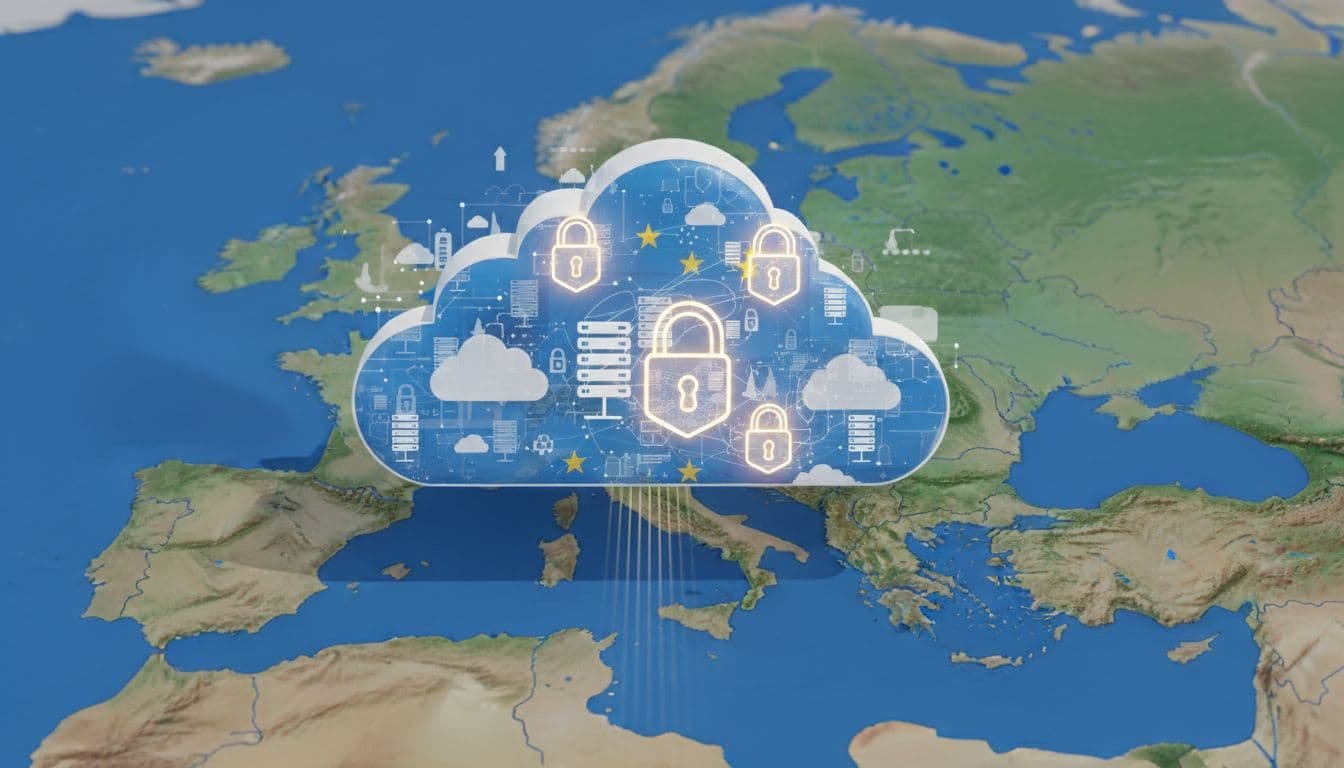
The market has responded. EU-native providers such as OVHcloud and Scaleway keep positioning around European control from the ground up. Telecom-backed platforms, including T-Systems, stress local operations and sector trust. US hyperscalers have moved too. For example, AWS’s January 2026 EU Sovereign Cloud announcement showed that even the largest providers now treat sovereignty as a separate design problem, not as standard regional hosting with new branding.
The engineering community has changed tone as well. CNCF’s Open Sovereign Cloud Day reflects a shift from policy slogans to concrete patterns, such as identity isolation, operational boundaries, and exit design.
How to separate real controls from marketing
Marketing usually starts with location. Real sovereignty starts with evidence. The safest buying posture is to assume that every claim needs proof.

Ask vendors to answer a few points in writing:
- Contracting entity: Which legal entity signs the deal, and where is it incorporated?
- Privileged access: Who runs admin, support, and incident response?
- Boundary map: Do logs, metadata, tickets, backups, and monitoring stay inside the stated boundary?
- Key control: Can you hold or isolate encryption keys, and who can invoke them?
- Subprocessors: Which affiliates or third parties can touch the service?
- Audit and exit: What audit rights, notice periods, migration support, and switching terms are binding?
Those answers help you compare provider categories without brand bias. EU-native clouds often offer stronger corporate separation. Telecom or national-cloud models may add local staffing, sector certifications, and familiar governance. Hyperscaler sovereign offerings may provide broader managed services, but the control plane, support path, and parent-company dependency still need close review.
Red flags become obvious once you look past the brochure. Be careful with phrases like “designed for sovereignty,” “aligned with European values,” or “sovereign-ready.” If a provider can’t name the operating entity, the admin boundary, the key model, and the audit mechanism, the claim is still soft.
Most importantly, match controls to workload sensitivity. HR records, health data, police systems, industrial IP, and AI training sets may need very different boundaries. Treat sovereignty as a risk-based design choice, not a badge.
Sovereign cloud in Europe is not one fixed product. It’s a bundle of legal, operational, technical, and governance promises, and each one should be testable.
Start with your highest-risk workloads. Then ask each vendor to prove the boundary, the operator, and the exit path in writing. If those answers stay vague, the service probably isn’t sovereign enough for the job.
For buyers extending the same verification approach to AI services, see our guide to verifying sovereign AI claims in Europe.

