VMware exits in 2026 aren’t only about replacing a hypervisor. They’re forcing a full rethink of Arm server TCO, software fit, power budgets, and how much change your team can absorb at once.
For many enterprises, the bottom line is simple. Arm can lower total cost, but only when the workload, licensing model, and migration path line up. If those pieces don’t line up, x86 may still be the cheaper choice, even with higher power draw.
Why Arm server TCO needs a wider lens in 2026
The first mistake in a VMware exit business case is to compare server prices and stop there. Most teams are reworking costs because renewal terms changed, budgets tightened, and architecture choices now have a longer tail. A good starting point is to review the current migration options for VMware users and map them to your renewal date, hardware refresh cycle, and app portfolio.
Arm looks attractive because the power story is real. In public cloud, 2026 pricing often shows Arm instances below comparable x86 rates for the right Linux workloads, and price-performance can improve as well. On-prem, lower draw can cut cooling load and improve rack density. If your site is close to a power cap, those gains may matter more than the server invoice.
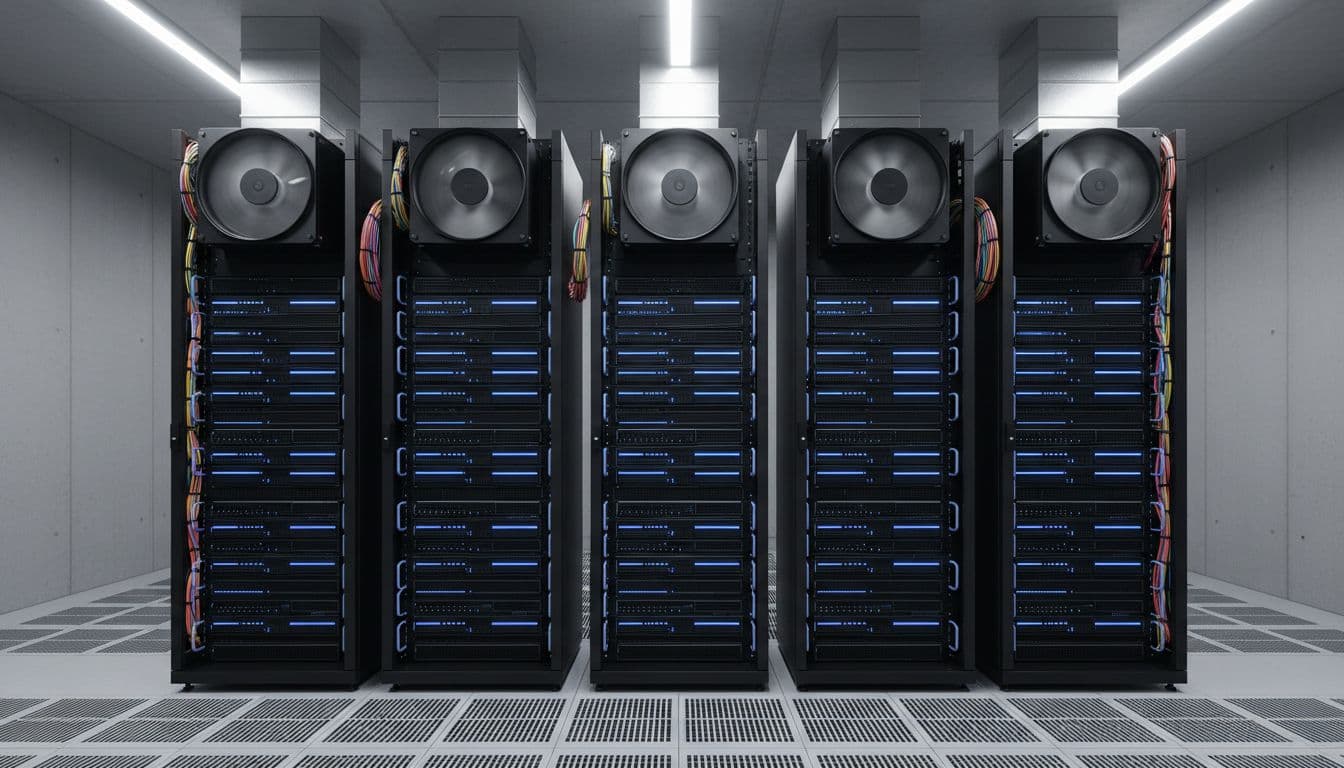
That matters even more because AI projects are competing for the same space and power. Every kilowatt you save on general compute can be reassigned to GPUs, faster storage, or network upgrades. For firms with sustainability targets, lower energy use also feeds directly into internal carbon and facility metrics.
The biggest TCO miss is treating CPU cost as the main line item. In most VMware exits, licensing, migration labor, and support risk move the number more.
A practical model should include four cost buckets:
- Hardware, power, cooling, and rack density over three to five years.
- Software licensing, including per-core, per-socket, and support contract rules.
- Platform operations, such as tooling, automation, training, and backup changes.
- Migration scope, including testing, refits, downtime risk, and parallel run periods.
This is where Arm can either shine or disappoint. If your stack is Linux-heavy and uses open runtimes, lower energy and better density often improve TCO. If your stack depends on proprietary ISVs, old agents, or strict certification, the savings can vanish before production day one.
How VMware exit paths change the Arm opportunity
The target platform matters as much as the CPU. A fast lift-and-shift to another x86 virtualization stack may cut VMware spend quickly, but it won’t always produce the best long-term economics. Arm makes more sense when the exit is also a chance to sort workloads by portability.
KVM-based platforms are often the clearest on-prem option for teams that want to keep a VM model and retain control. They fit Linux shops well, and open stacks tend to move faster on architecture support. Some vendors are already pushing that direction, as shown by Vates’ work on Arm-based virtualization.

OpenShift Virtualization is different. It works best when the goal is a shared platform for VMs and containers, not a one-for-one VMware replacement. That can improve long-term cost because teams standardize on Kubernetes operations and can plan around AI-adjacent infrastructure later. Still, the first-year cost may rise because platform engineering, retraining, and automation work arrive early.
Nutanix AHV appeals to buyers who want an integrated stack and less assembly work. Yet Arm fit there depends less on the hypervisor name and more on certified hardware, storage design, and the vendor’s support matrix. If the business needs predictable operations and quick reuse of existing x86 assets, AHV on x86 may beat an Arm move on total cost.
Public cloud offers the safest way to test the Arm case before buying servers. A recent workload-by-workload comparison of Graviton4 and Azure Cobalt shows why broad claims fail. AWS often shows clearer Arm savings for new Linux services, while in Azure the gap can narrow enough that engineering fit matters more than raw rates.
Bare metal has its own place. It strips out hypervisor overhead and license layers, so it can work well for web tiers, platform services, and high-throughput Linux systems. But it doesn’t solve the needs of teams that still depend on VM mobility, mature disaster recovery patterns, or broad Windows support.
Where Arm lowers cost, and where x86 still wins
Arm usually improves TCO when the workload is scale-out, Linux-first, and not tied to proprietary hardware assumptions. That includes microservices, CI runners, Kubernetes workers, caches, API tiers, and many stateless application services. It also fits dense colocation sites and edge locations where power and cooling are scarce.
This quick comparison is a better guide than any single benchmark:
| Scenario | Arm TCO outlook | x86 TCO outlook |
|---|---|---|
| New Linux platform build | Often strong, because refit work is low and power savings compound | Good, but usually less efficient per watt |
| Large VM lift-and-shift | Mixed, because guest and tooling support may slow migration | Often better for speed and compatibility |
| Per-core licensed software | Mixed, because many-core designs can inflate license counts | Often safer if fewer high-performance cores reduce licenses |
| Windows-heavy or legacy ISV estate | Usually weak, because support gaps add risk | Usually stronger, because support is broader |
x86 still deserves a serious place in 2026 plans. It remains the safer choice for older Windows estates, vendor-locked middleware, backup products with narrow support matrices, and apps that need high per-core speed or specialty instruction support. In those cases, the cheaper platform is often the one that avoids refactoring and lengthy test cycles.
ISV support for Arm is better than it was a few years ago, but maturity is uneven. Common Linux distributions, containers, Java, Go, NGINX, PostgreSQL, and much of the cloud-native stack are in good shape. Some security tools, niche databases, VDI components, and proprietary appliances still lag.
That is why the best 2026 designs are often mixed. Keep anchored workloads on x86, place portable services on Arm, and use public cloud Arm instances as a benchmark for on-prem buying. That approach turns the VMware exit into a controlled separation of fast moves and smart moves.
Conclusion
The right question isn’t whether Arm is cheaper in the abstract. The right question is where Arm server TCO stays lower after you count licensing, migration effort, support maturity, and power headroom.
For many VMware customers, Arm is strongest in new Linux services, dense facilities, and modernization work that already changes the application boundary. x86 still wins where compatibility, certification, and migration speed matter more than energy efficiency. The best exit plans in 2026 accept both facts and price each workload accordingly.

