A 2026 AI rack can turn an older data hall into a heat trap fast. That’s why liquid cooling retrofit costs now sit in budget meetings, not only in facilities reviews.
If you’re adding GPU capacity to an existing site, the rack price is only part of the story. The real spend often lands in power work, pipe routing, floor loading, downtime planning, and how quickly the new cluster can go live. Start with the economics that changed this year.
Why 2026 changed the retrofit math
Many AI deployments now target rack densities that older rooms were never built to support. A hall designed around 5 to 15 kW per rack can’t easily absorb 100 to 200 kW AI racks with air alone. At some point, adding more fans is like trying to cool a furnace with desk lamps.
That’s why brownfield upgrades have moved from stopgap to mainstream planning. As Schneider Electric’s brownfield AI modernization analysis points out, many operators would rather reuse powered, connected sites than wait years for new campuses. In 2026, speed has its own return.
At the same time, the supply side looks better than it did a year ago. More standard kits, hybrid designs, and service partners have reduced some early-adopter friction. Industry reporting in Introl’s legacy retrofit overview reflects that shift, especially for phased deployments where only part of the room goes liquid first.
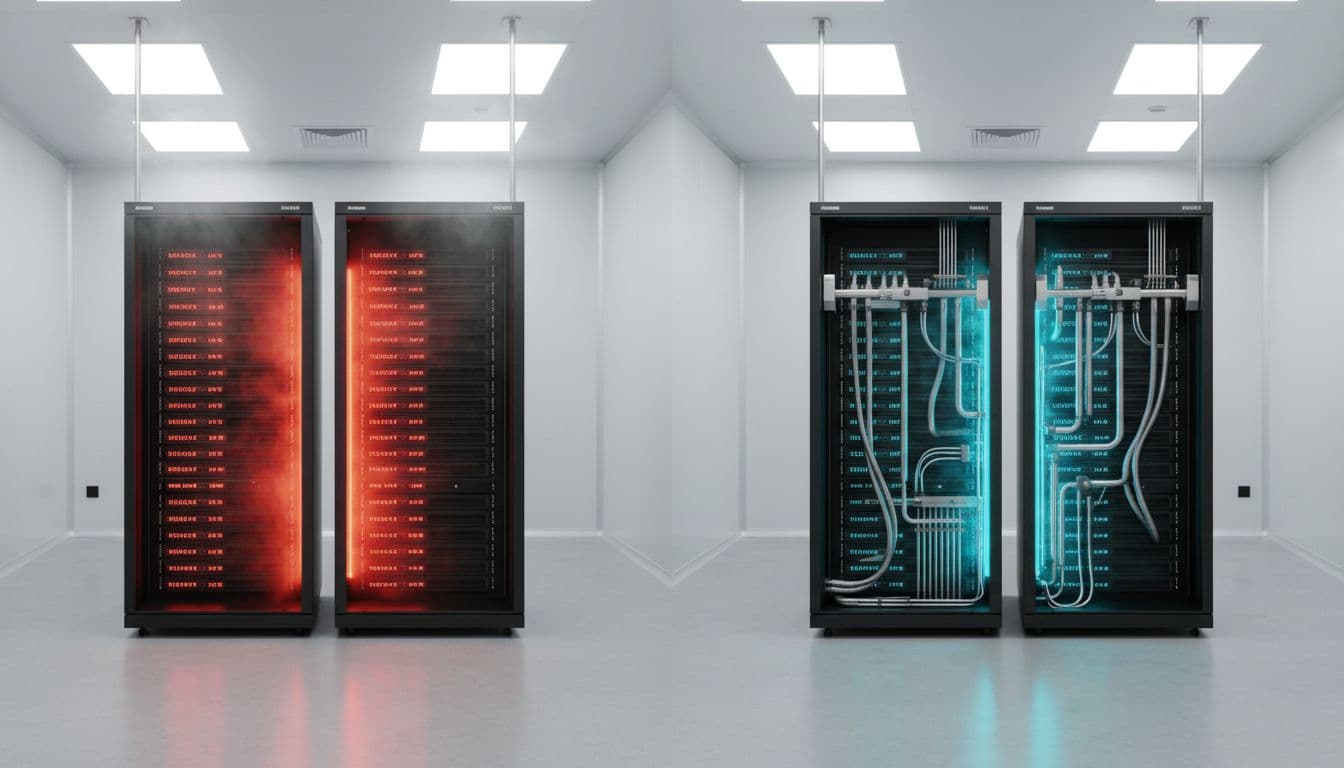
High-density AI zones often force a move from air-only cooling to mixed or liquid-first designs.
Still, retrofitting isn’t automatically cheaper than building new. It’s usually cheaper only when the existing shell, power path, and network position still have value. If those foundations are weak, the cooling system becomes one expensive piece of a larger rebuild.
Directional liquid cooling retrofit costs in 2026
There’s no universal price card for retrofits. Directional estimates vary by facility age, rack density, geography, cooling architecture, redundancy targets, and deployment scale.
Here’s a simple view of common 2026 starting ranges:
| Retrofit path | Directional 2026 cost | Typical fit | Main tradeoff |
|---|---|---|---|
| Rear-door heat exchangers | $8,000 to $15,000 per rack | 15 to 30 kW racks | Lower disruption, limited headroom |
| In-row liquid-assisted cooling | $20,000 to $35,000 per rack | 40 to 100 kW zones | Better density, more floor-space use |
| Direct-to-chip retrofit | $50,000 to $80,000 per rack | 60 kW and above, often 100 kW plus | Best thermal control, most integration work |
The headline range helps, but it can mislead. A direct-to-chip project may look like a per-rack buy, yet the budget usually spreads across CDUs, manifolds, hoses, quick disconnects, leak detection, controls, heat rejection, commissioning, and staff training. A typical direct liquid cooling architecture shows how many parts sit outside the server itself.
In many retrofits, the enabling work costs as much as the cooling hardware.
That shows up clearly in cluster-level budgets. A directional 20-rack example in current market reporting lands around $3.3 million total, including equipment, electrical work, install labor, structural fixes, project work, and contingency. That doesn’t make $3.3 million a benchmark. It shows how fast “per rack” math can understate the real bill.
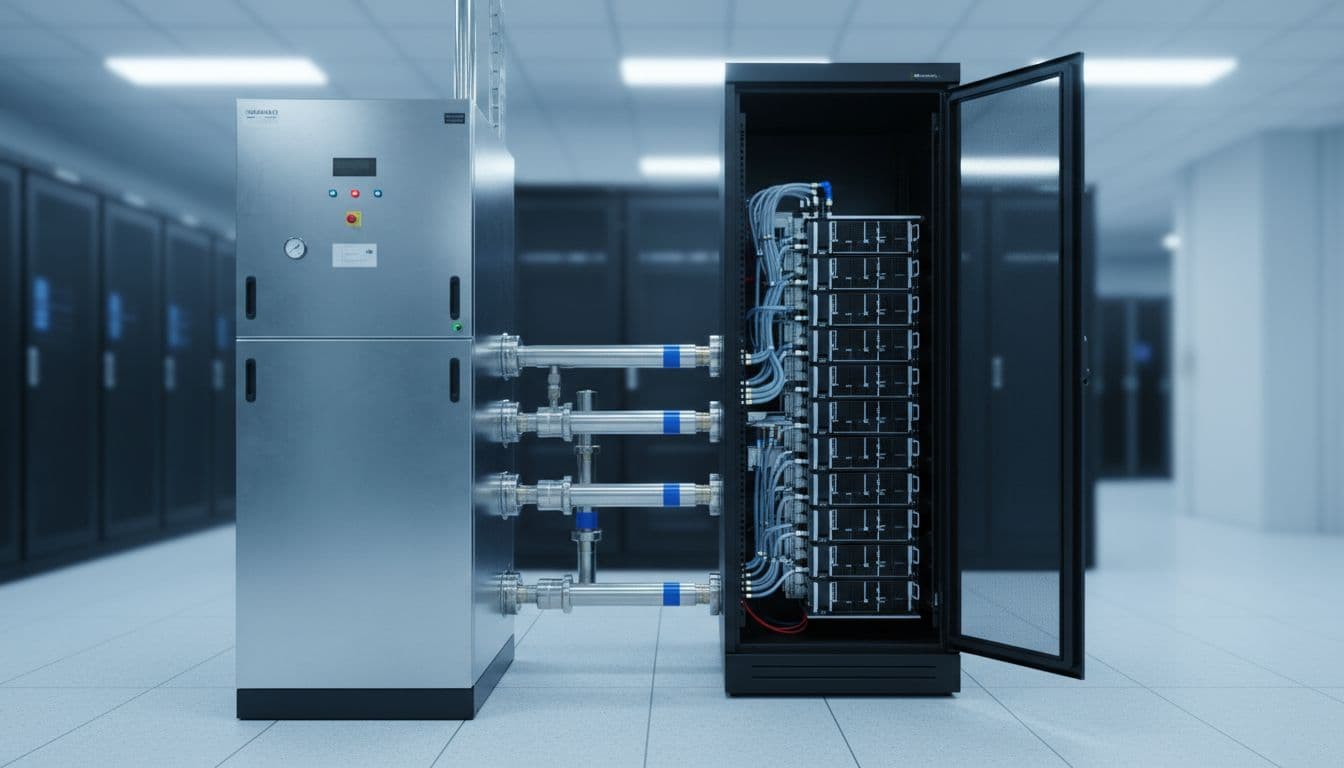
CDUs, manifolds, and connections often shape both cost and install complexity.
What pushes budgets up, and when building new makes more sense
The biggest cost driver is often power, not cooling. If the site lacks usable electrical headroom, the retrofit may stall before piping even starts. In some markets, utility upgrades can take 12 to 24 months and add major cost per MW. When that happens, liquid cooling can solve the heat problem without solving the business problem.
Physical constraints come next. Dense AI racks are heavy, and some rooms need floor reinforcement. Raised-floor congestion, slab penetrations, ceiling routing, and limited space for CDUs can all push labor up. Water chemistry, filtration, and leak response planning also matter more than many first-pass budgets assume.
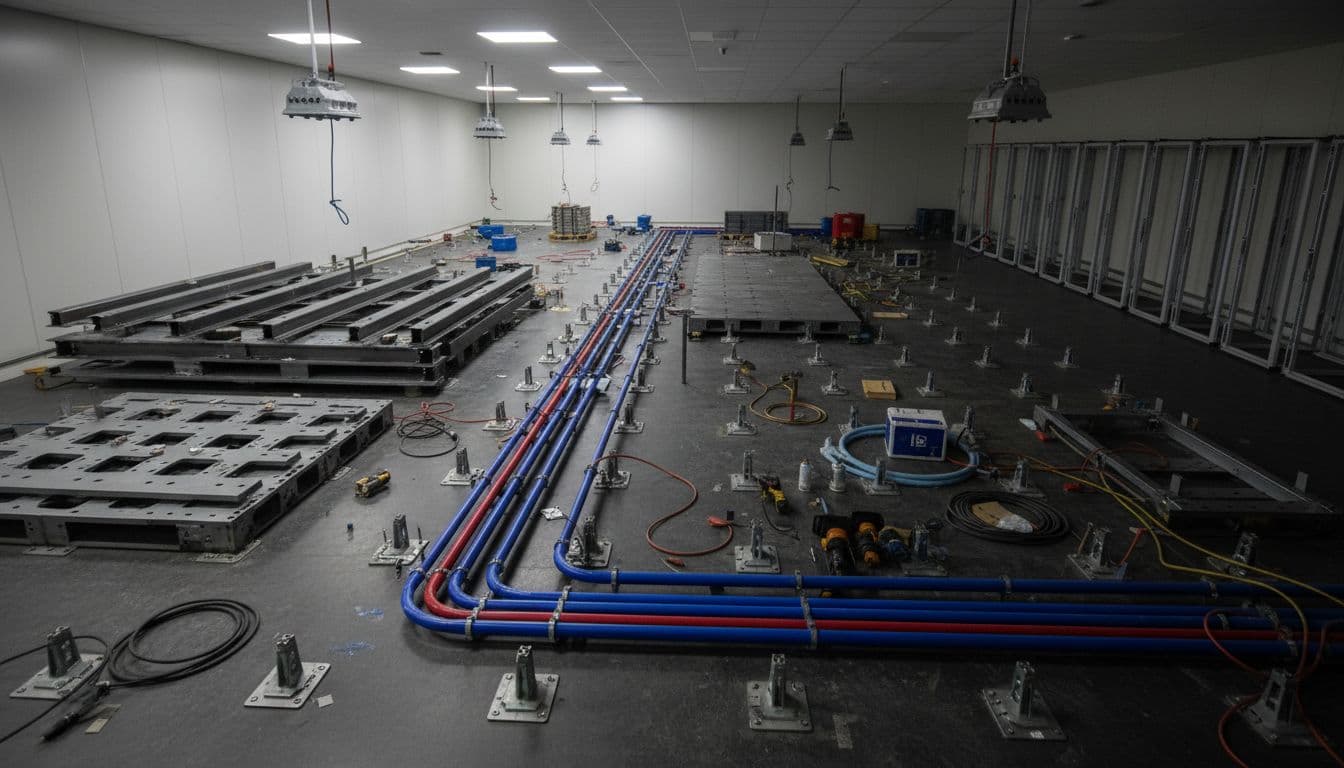
Older rooms often need pipe-routing and structural work before any AI rack goes live.
Operations add another layer. You may need phased outages, firmware validation, spare-part planning, vendor warranty checks, and new maintenance skills. Those costs are harder to see on day one, but they show up later if the team isn’t ready.
ROI, then, depends on more than lower fan power. The strongest cases usually combine three gains: faster AI deployment, higher rack density, and avoided new-build spend. As Vertical Data’s ROI discussion argues, timing matters as much as efficiency. Many operators model payback in about three to four years, but only when utilization stays high and the retrofit unlocks revenue or major capacity relief.
Retrofitting often makes sense when you can carve out a high-density island inside a still-healthy facility. It also fits sites with good network position, spare utility capacity, and a need to deploy in 6 to 24 months. Building new tends to win when the whole hall needs heavy structural work, the power path is tapped out, or the project needs several megawatts of net-new AI capacity with long-term expansion room.
The bottom line for 2026 planning
The most accurate way to read liquid cooling retrofit costs in 2026 is this: the cooling gear sets the direction, but the building sets the price. A good retrofit uses the value that already exists, power access, shell, network, and location, without forcing the site past its limits.
If you’re evaluating a project now, pressure-test the non-obvious line items first. Power, structure, and downtime risk will decide whether the retrofit pays back fast or turns into a slow-motion rebuild.

